
Here's a story I hear most weeks. Someone's been building up their running, or got back into tennis, and there's a nagging tightness at the back of the heel. It's stiff and sore for the first few steps in the morning, warms up once they get going, then grumbles again afterwards. So they rest it for a fortnight, feel great, ramp straight back up — and it flares within a week.
Sound familiar? The frustrating cycle usually comes down to one misunderstanding about how tendons work.
What's actually going on
The Achilles is the big tendon that connects your calf muscles to your heel bone, and it takes enormous load every time you push off. When you do more than it's currently conditioned for — a jump in training, new shoes, hills — it can get irritated and start to grumble. That's Achilles tendinopathy, and it's one of the most common overuse complaints I see.
(Worth saying: a sudden sharp calf or Achilles injury — the "someone kicked me" feeling — is different, and a short period of relative rest and the RICER approach makes sense early on. It's the slow-burn, nagging kind we're talking about here.)
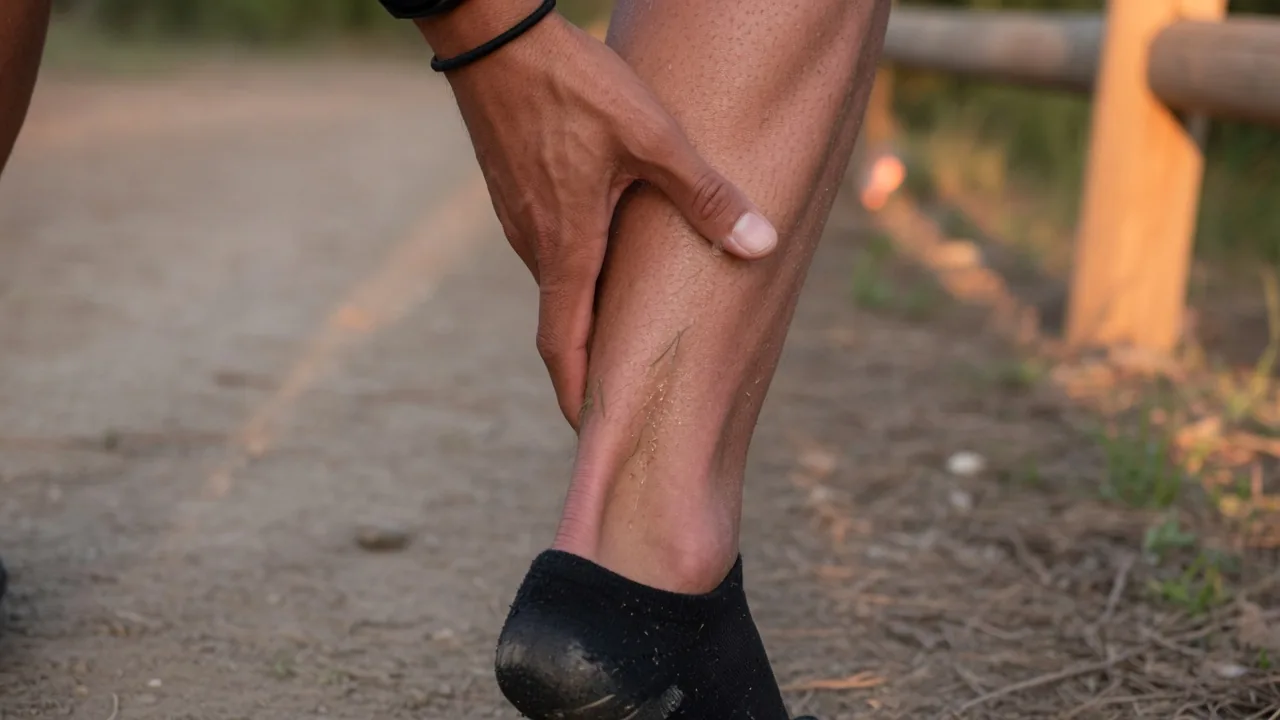
Why resting it doesn't fix it
Here's the key: tendons get stronger by being loaded, not by being rested. If you completely stop, the pain settles because you've removed the load — but the tendon hasn't got any stronger, so the moment you return to your old training it's overwhelmed again. That's the flare-rest-flare loop in a nutshell.
The way out is a graded loading program. Progressive calf and Achilles strengthening — starting at a level the tendon tolerates and building slowly — is the cornerstone of recovery. It genuinely remodels the tendon so it can handle your sport again. It's not glamorous, and it takes patience (tendons work in months, not days), but it's what works.
Stuck in the flare-rest-flare loop? We build proper loading plans for calf and Achilles pain across South East Queensland — Caboolture, Beenleigh, Browns Plains and Victoria Point.
Book an appointmentWhere a podiatrist comes in
The tricky part is pitching the load just right — enough to strengthen the tendon, not so much that you flare it. That's where a proper assessment saves you months of trial and error. We work out what stage your tendon is at, build a loading plan around it, and sort out anything that's overloading it in the first place — footwear, a sudden training spike, or the way your foot and ankle move. A running assessment is often the missing piece, and sometimes an orthotic or a temporary heel raise takes the edge off while the tendon builds. If the pain's really limiting you, we'll also help with settling it down so you can get the loading work done.
Common questions about calf and Achilles pain
Rest it or load it?
For the nagging, overuse kind, load it — a graded strengthening program is the fix. Short relative rest suits a sudden, acute strain.
Why is it stiff in the morning?
Morning stiffness at the back of the heel that warms up is a classic Achilles tendinopathy sign — worth getting assessed.
How long does it take?
Usually months, because tendons remodel slowly — but you can often keep doing modified activity throughout.
Can I keep running?
Often yes, with the load dialled to what the tendon tolerates plus a strengthening plan. A podiatrist helps you find that line.
Want it sorted properly this time? We'll get your calf and Achilles loading the right way and keep you moving while it heals. Clinics at Caboolture, Beenleigh, Browns Plains and Victoria Point.
Book an appointmentReferences & further reading
- healthdirect (Australian Government) — Calf pain: causes, treatment and prevention.
- Better Health Channel (Victorian Government) — Achilles tendinopathy.
- de Vos RJ, et al. Physiotherapy management of Achilles tendinopathy. Journal of Physiotherapy.
This is general information, not individual advice. If your calf or Achilles pain is persistent or severe, please see a podiatrist or other health professional for an assessment.